Project Archive
Bewerbungssim
An AI-powered job interview simulator. Practice real interviews with voice interaction, get instant feedback, and walk into your next interview prepared. Built and run from 2023 to 2026.
What it was
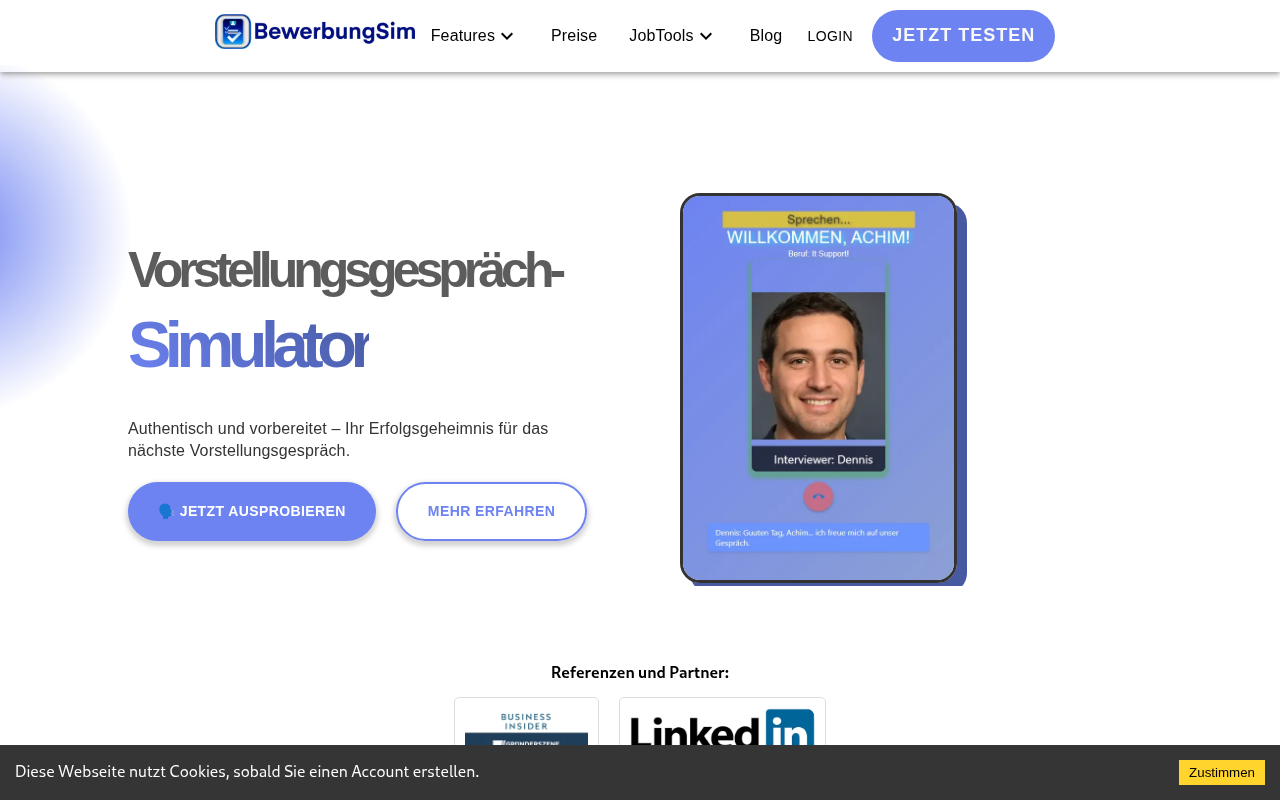
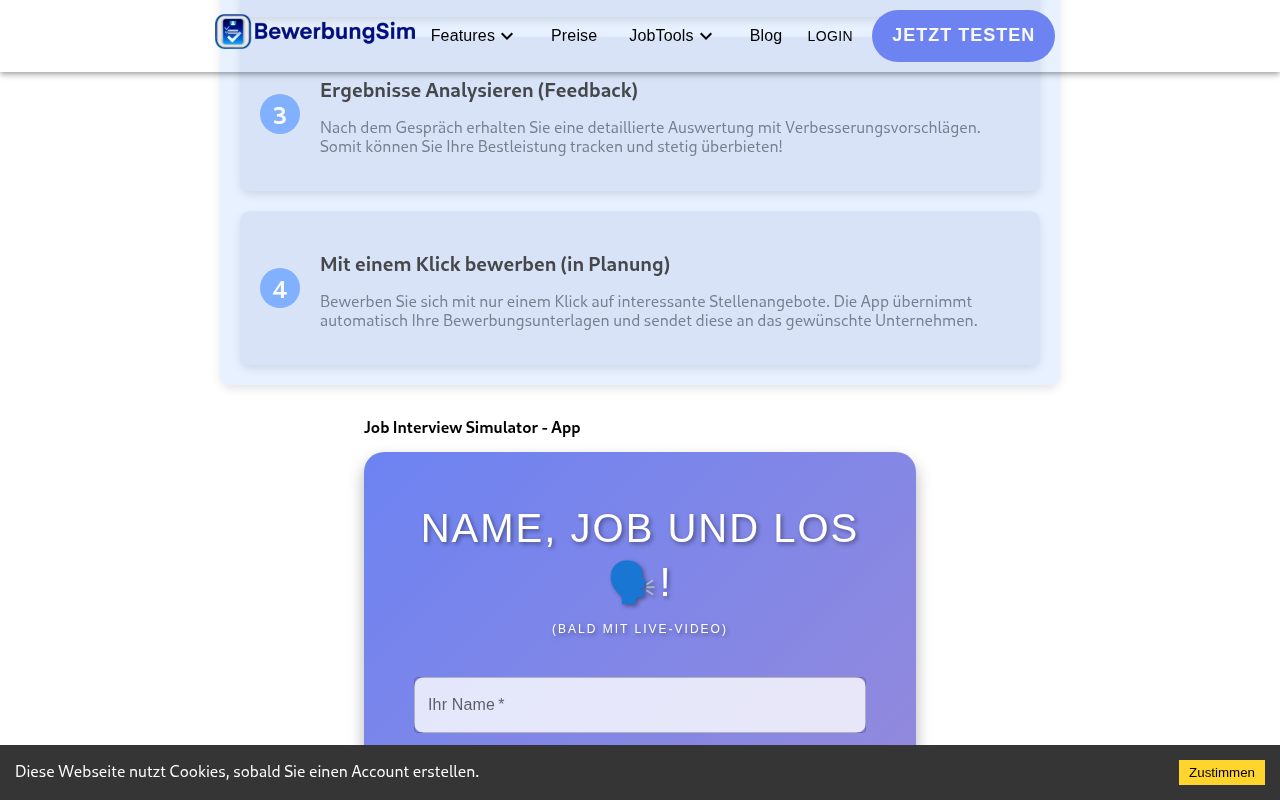
Bewerbungssim (German for "application simulator") let users practice job interviews with an AI interviewer in real-time. You'd enter your name and target job title, and the simulator would conduct a dynamic, voice-driven interview, adapting questions based on your answers.
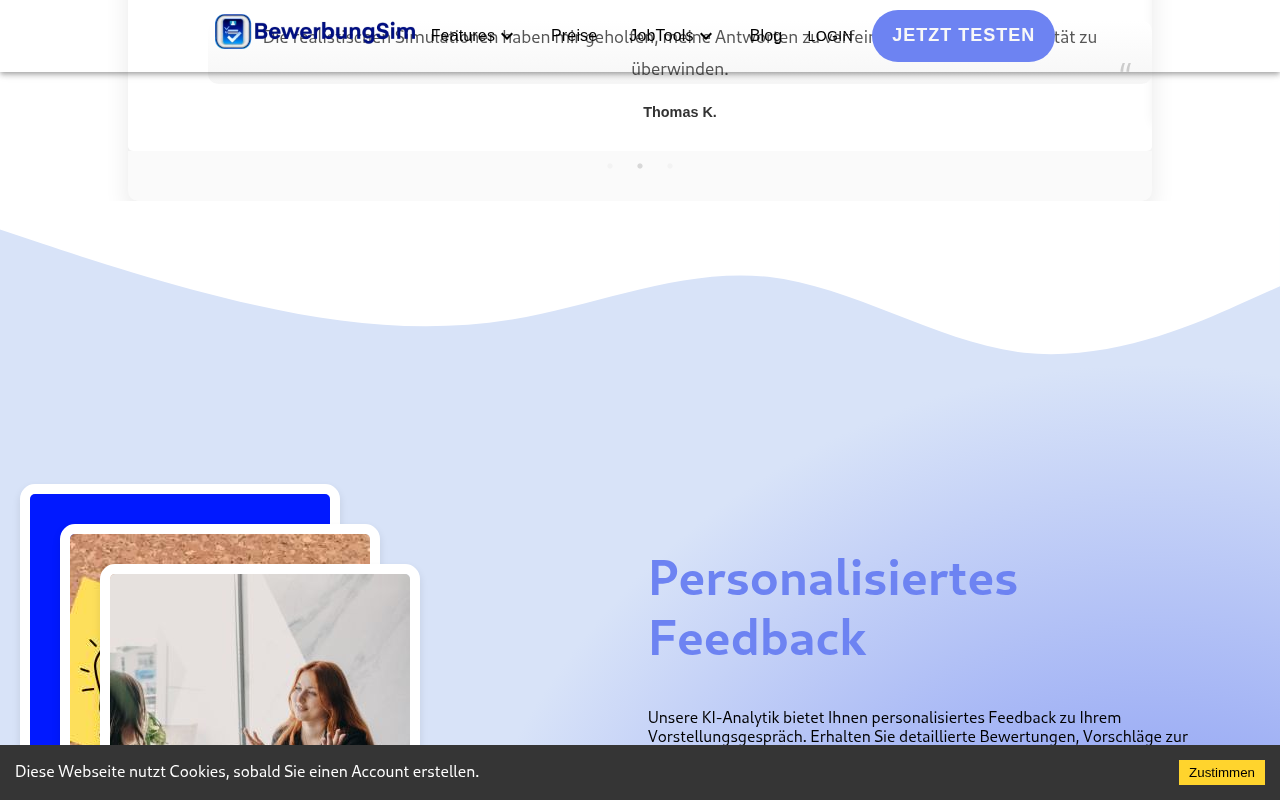
After each session, the AI analyzed your responses and delivered personalized feedback on communication, confidence, and interview technique. The entire interaction happened via browser-native speech recognition, so no headset or plugin was needed.
Screenshots
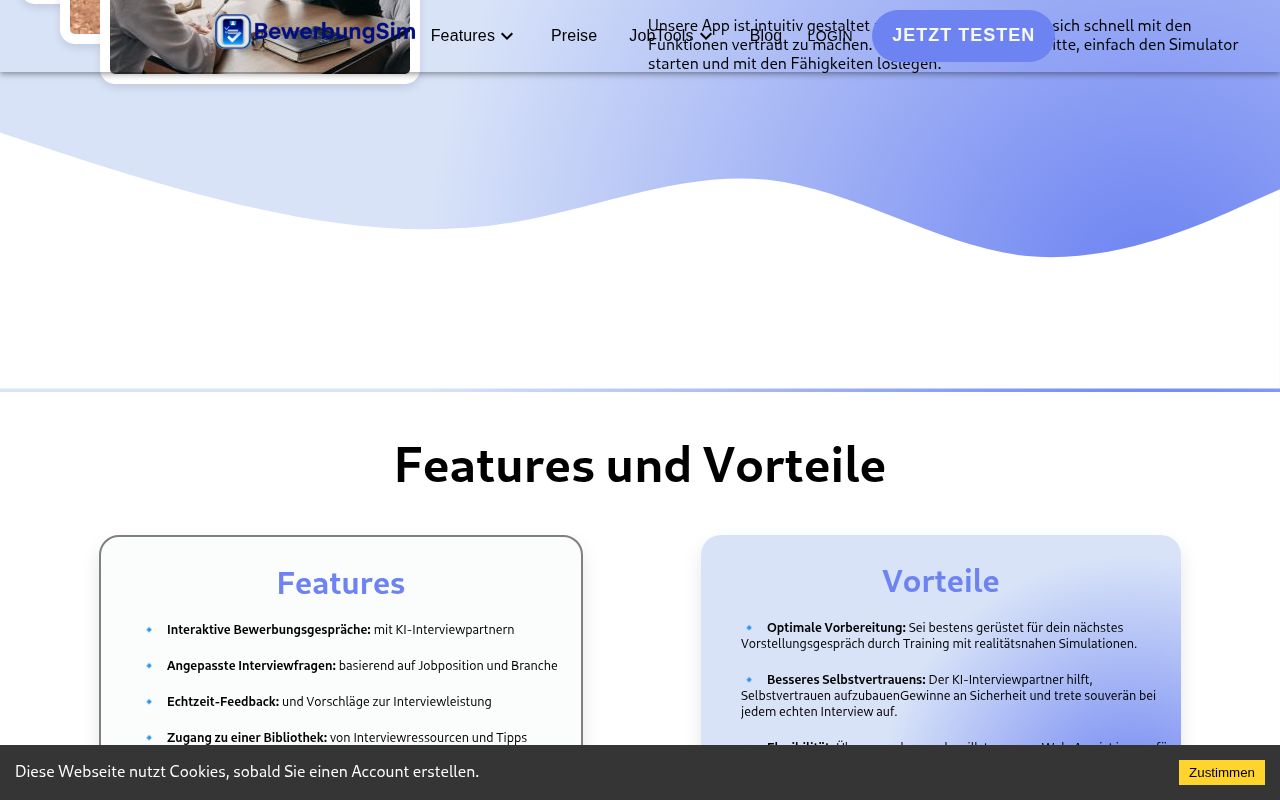
Core Features
Voice-driven interviews
Full interview sessions via Web Speech API. Speak your answers, get spoken back to.
AI interviewer
Dynamic questions powered by GPT and Claude, adapting in real-time to your responses.
Application check
Upload your CV and cover letter. The AI reviews and rates your documents.
Instant feedback
After each session: detailed analysis of your answers, tone, and interview readiness.
Job listings
Integrated job search — practice, then apply, all in one place.
Industry-specific
Questions tailored to your target role and company, not generic scripts.
Under the Hood
Frontend
- React 18
- React Router v6
- Material UI v5
- Web Speech API
- react-speech-recognition
Backend
- Node.js + Express
- HTTPS / Let's Encrypt
- Rate limiting
- Nodemailer
AI
- OpenAI GPT (primary)
- Anthropic Claude
- ElevenLabs (TTS)
- PDF parsing for CV upload
Infrastructure
- MongoDB (4 databases)
- DigitalOcean VPS
- Descope (Auth)
- Stripe (Payments)
- Puppeteer (job scraping)
Why we shut it down
When Bewerbungssim launched in 2023, AI interview coaching was a genuine gap in the market. We built voice interaction, real-time feedback, and job-context awareness from scratch because none of the major providers offered it.
By 2025, that changed. OpenAI, Google, and others integrated native voice and conversational AI directly into their flagship products, with better speech recognition, lower latency, and more computing power than an independent service could match.
The problem we set out to solve is solved. Just not by us, and that's fine.